
I am forever amazed at the links I discover between Ossining and the world.
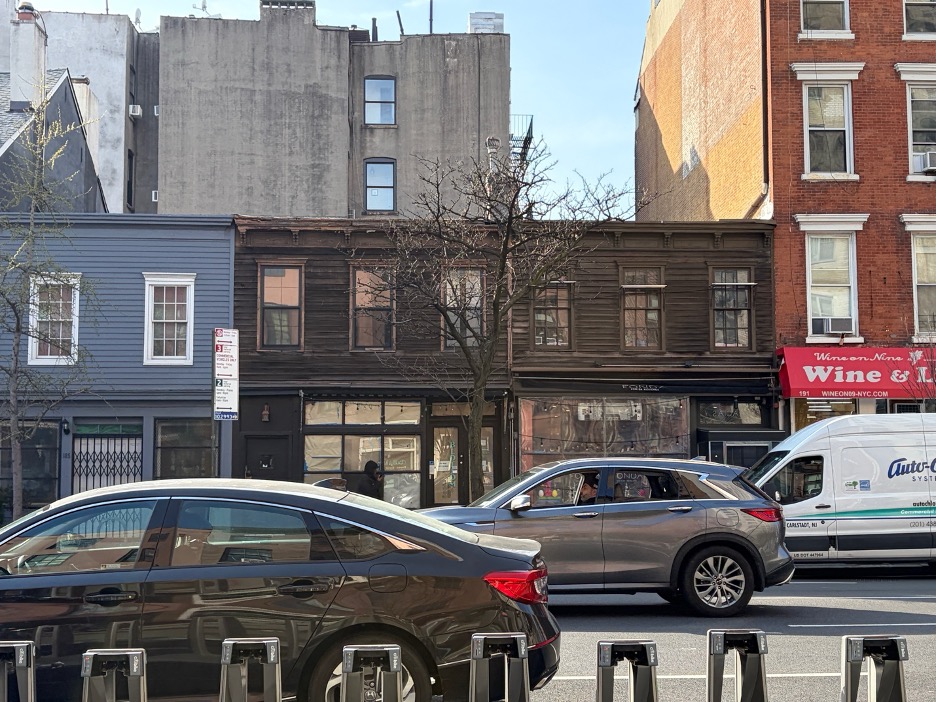
Take these three little buildings – two stories, their addresses are 185, 187 & 189 Ninth Avenue. I noticed them as I walked downtown on that first glorious spring day this year. I mean, they just stick out – they’re so small, so square, so . . . wooden! How have they managed to survive? And how long HAVE they been standing?
A little armchair research turned up this fantastic blog post.
And the very first thing I read was “As Clement Clark Moore divided his family estate, Chelsea, into building plots in the early 1830’s . . .” Wait just a minute – CLEMENT CLARK MOORE? The “’Twas the Night Before Christmas” author? Why, he lived in Ossining! Or, at least, he owned some very desirable property in Ossining.
Quite the savvy real estate investor was Mr. Moore – owning Chelsea (the name of his estate that has been absorbed by the neighborhood), then selling it off in the 1830s when the population of NYC was exploding. And in 1839, purchasing the former Orser farm, site of a Revolutionary war skirmish in January 1783, renaming it Moorehaven. It seems that Moore bought the property for his son Benjamin who lived there and many years later hired architect Stanford White in the 1880s to oversee a major renovation of the house.

Moorehaven today
Another interesting connection I discovered was that when Clement Moore sold off his Chelsea estate, a man named James N. Wells handled the sales and leasing of the parcels. This same James N. Wells purchased what would become Moorehaven in 1836 from its very first American owner – a farmer named Alfred Orser (or Auser). Orser had settled there in 1741, long before the Revolutionary War, when the land was still owned by Frederick Phillipse III, the last Lord of the Manor. Orser, as a tenant farmer, had built the house that still stands, later to be enveloped in Stanford White’s expansion.
I need a nap after making all these connections!


Leave a comment